The Thesis: Your First Draft Was Never Sacred
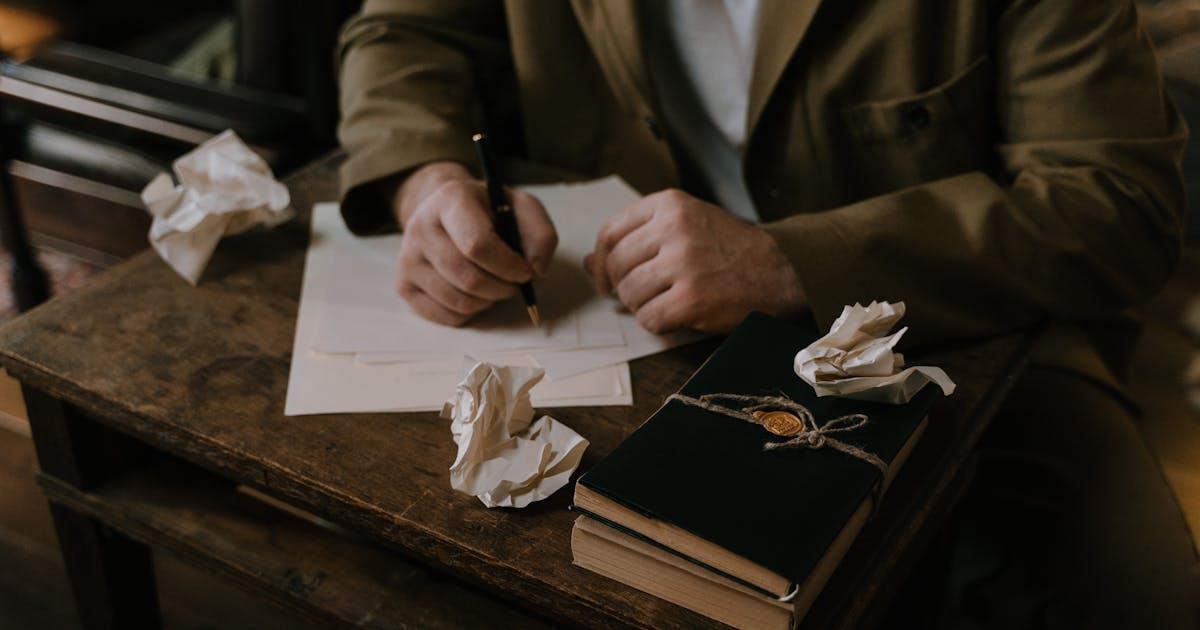
Somewhere between the twentieth century and now, we developed an almost religious attachment to the blank page. Writers were meant to suffer before it, wrestle with demons, and finally, heroically, produce. The first draft became a kind of blood oath. But here is an uncomfortable truth: that myth has always been more about ego than craft.
"While most writing advice treats the first draft as sacred, the most prolific creators understand that the draft is just raw material. And raw material has no ego."
This is a love letter. Not to AI, exactly, but to what AI writing tools have revealed about the creative process itself. They have shown us that starting with a draft, any draft, is not cheating. It is strategy. It is what the best writers have always known, even when they pretended otherwise.
We have spent generations romanticizing the struggle. The image of Hemingway bleeding onto the page, of Woolf battling the void. And yes, those are beautiful stories. But they are also, let us be honest, stories. The reality of professional writing has always been messier, more iterative, and far less romantic than the mythology suggests. Great writers revise. They steal from their notes. They talk through ideas with editors. They work with material, not from nothing.
AI drafts are simply the latest tool in a long tradition of not starting from zero. And it is time we stopped pretending that is somehow beneath us. (If you want better raw material to work with, learn how to talk to AI effectively—the quality of your starting point matters.)
The Blank Page Problem: A 2026 Reality Check
You open a new document. The cursor blinks. You write a sentence, delete it, write another, delete that too. An hour passes. You have seventeen words and a growing suspicion that you chose the wrong career. This is not a personal failing. This is the blank page problem, and it has been tormenting writers since the invention of the page itself.
The psychology here is well documented. Researchers call it decision paralysis, though anyone who has stared at an empty document knows it feels more like a slow drowning. When you face infinite possibilities, the mind freezes. Every potential first word carries the weight of every subsequent word. The pressure is absurd, but it feels very real.
The Perfectionism Trap
Every word you write from scratch feels like a commitment. You edit while drafting, killing momentum before it builds. The internal editor and creator fight for control, and usually, nothing gets written at all.
Choice Paralysis
With nothing to react to, your brain treats every direction as equally valid and equally risky. Having something, anything, on the page gives you a target. You can argue with a draft. You cannot argue with emptiness.
The First Sentence Fallacy
We treat opening lines like they must be perfect from the start. But professional writers know the truth: you often do not find your real beginning until the third draft. The first sentence is always a placeholder.
Traditional writing advice tells you to push through. Just start. Write anything. And yes, that works sometimes. But it also burns through willpower at an alarming rate. It treats writing like an endurance sport rather than a craft. Hemingway himself famously said the first draft of anything is garbage. He was right. So why do we keep treating the production of garbage as the hard part?
The Missing Link: Editing Is the Real Creative Act
Here is the insight that changes everything: the craft of writing has always been in the editing, not the initial output. The draft is clay. The editing is sculpture. We have simply been confused about which part requires the artistic vision.
The first time I used an AI draft, I felt like I was cheating. Here was this machine producing paragraphs that I had not sweated over, sentences I had not bled for. It felt wrong in a way I could not quite articulate. But something interesting happened by the third revision: I had never been more engaged with my own ideas.
The AI draft showed me what I did not want to say. It gave me something to push against, to argue with, to refine. Every change I made was a statement of intent. Every deletion was a clarification of voice. The final piece was more me than anything I had written from scratch, because every word that remained had survived a deliberate process of selection.
Traditional Workflow
- Stare at blank page (energy: high, output: zero)
- Fight through draft while self-editing (energy: depleted)
- Feel emotionally attached to hard-won words
- Reluctantly edit, keeping weak passages
- Publish something adequate
AI-Assisted Workflow
- Generate draft from outline (energy: preserved)
- Read with fresh critical eyes
- Identify what does not sound like you
- Ruthlessly edit without emotional attachment
- Publish something refined
This is not outsourcing creativity. This is front-loading the editorial process. You are not asking the AI to think for you. You are asking it to give you something to think about. The difference is crucial.
"Writing is rewriting. What I produce in the first draft is almost always wrong. The magic happens in the revision, where I discover what I actually meant to say."
- Every honest writer, eventually
The writers who resist AI assistance are often the same ones who romanticize the suffering of creation. And I understand the appeal. There is something noble about the struggle narrative. But nobility does not pay the bills, and it certainly does not help you ship work that matters. The question is not whether you struggle. The question is where you choose to struggle. I would rather struggle with meaning than with momentum.
The Psychology of Creative Blocks (And How AI Dissolves Them)
Creative blocks are rarely about ability. They are almost always about fear. Fear of judgment, including the harshest kind: self-judgment. When you write from scratch, two competing impulses fight for control of your brain. The creator wants to explore, to play, to make unexpected connections. The editor wants to refine, to polish, to ensure quality. They cannot both operate at once, and the attempt to force them together is what we call writer's block.
Here is what AI drafts change: they separate creation from critique. You are not generating the raw material, so you can approach it with pure editorial vision. There is no wounded ego when you cut a paragraph, no attachment to a phrase just because it took you twenty minutes to produce. The words are not yours until you choose to keep them.
The Key Psychological Shift
When you write from scratch, every word feels precious because you created it from nothing. When you edit an AI draft, you feel empowered to cut ruthlessly because you are not emotionally attached. This separation of ego from output is psychologically liberating.
Think of it this way: a sculptor does not create marble. They shape it. The marble exists before them, and their artistry lies in what they choose to reveal. AI drafts are your marble. They are raw material with potential, waiting for the sculptor's eye.
The practical implication is this: approach AI drafts as a collaborator's rough sketch. You are not reading your own work. You are reading a proposal, an offer, a starting point. You can accept it, reject it, or more likely, transform it into something that neither you nor the AI could have produced alone. That hybrid output is where the real magic happens.
I have watched writers who claimed they could never use AI assistance produce their best work once they reframed the relationship. They stopped seeing it as replacement and started seeing it as provocation. The AI says something slightly wrong, and suddenly they know exactly what they want to say. It is creative judo, using the machine's momentum to propel your own ideas.
From Writer to Strategist: The New Creative Workflow
Let us address the elephant in the room: the fear of being called lazy. It haunts every writer who has considered AI assistance. We have internalized the idea that effort equals value, that suffering equals art. But this calculation has always been suspect. An architect does not hand-draw every line. A film director does not operate every camera. A magazine editor does not write every article. We do not call them lazy. We call them professionals who understand how to direct their energy toward what matters.
The shift is from word producer to idea curator. Your value is not in the typing. It never was. Your value is in knowing what to say, how to frame it, which words to keep and which to kill. The strategic mind directs the work. That has always been the case, but AI makes it explicit in a way that some find uncomfortable.
Old Identity
- Value measured by word count
- Suffering as creative credential
- Drafting as the main event
- Protective of every sentence
- Writer as lone genius
New Identity
- Value measured by impact
- Strategy as creative credential
- Editing as the main event
- Ruthless about what stays
- Writer as creative director
The time you save on drafting does not disappear. It transforms into time for research, for refinement, for the kind of deep thinking that produces genuinely original work. You can afford to read more sources, consider more angles, refine more drafts. Quantity of iteration improves quality of output. This is not laziness. This is leverage.
Does this workflow actually scale? See how we published 30 blog posts in a week for proof that treating drafts as raw material enables output that would be impossible otherwise.
Addressing the "Lazy Writer" Criticism
Using AI assistance makes the human contribution more visible, not less. When you edit an AI draft, every word that remains is a conscious choice. Every turn of phrase that survives is there because you decided it should be. The final product is shaped entirely by your judgment, taste, and voice. You cannot hide behind "the draft came out that way." Every weakness is yours to own. Every strength is yours to claim.
Your voice emerges through what you change, add, and remove. Not from the first attempt. The first attempt was always scaffolding. Now we just have better scaffolding.
Embracing Imperfection to Unlock Creativity
The AI draft is intentionally imperfect. And that is its gift.
Perfectionism has killed more writing projects than lack of talent ever did. We start with high standards, reasonable enough, and those standards grow teeth. They bite every sentence before it reaches the page. The internal editor becomes a tyrant, and the creator retreats into silence. How many essays have died in the mind because the first paragraph was not good enough to continue?
AI drafts bypass this tyranny entirely. They give you permission to work with something imperfect because the imperfection is not yours. You did not fail. You received raw material. The psychological difference is immense. You can look at a mediocre AI paragraph without shame. You can tear it apart without guilt. You can rebuild it without the weight of sunk cost whispering that you should preserve your efforts.
"Good enough to edit is the new good enough to publish. Permission to start imperfect changes everything about creative momentum."
Many of us were taught that struggling with the blank page is noble. That suffering is a prerequisite for art. I understand the appeal of this narrative. It makes our hard-won words feel more valuable. But nobility does not scale, and suffering is a poor teacher. The goal is not to eliminate craft. It is to locate craft in the right place: refinement, not generation.
I think often of the artisans who first used power tools. There must have been purists who insisted that only hand-carved furniture was real furniture. That the machine somehow diminished the craft. We can smile at their concern now. The furniture was never about the sawing. It was about the design, the fit, the finish. The tools changed. The craft remained. Sometimes it even improved, freed from the drudgery of what came before.
This is a love letter, I said at the start. Not to AI, but to writing. To the act of shaping words into meaning. AI has not diminished that act. It has revealed it. It has stripped away the false nobility of the blank page and shown us what was always true: the magic was never in the drafting. The magic is in the decision-making that follows.
Summary: A New Relationship With the First Draft
If you take nothing else from this piece, take these five ideas:
- The first draft myth is a creativity killer. We romanticized struggle and called it art. Real craft lives in revision.
- Editing is the creative act. The draft is clay. You are the sculptor. Your artistry is in what you shape, not what you dig up.
- Separation of ego from output is liberating. When you do not own the first draft, you can cut without remorse and refine without attachment.
- Your value is strategic, not mechanical. Directors do not operate every camera. Writers do not need to type every word.
- Imperfection is permission. Starting with something flawed beats starting with nothing. Momentum beats nobility.
The mindset shift in one sentence: stop treating the blank page as sacred territory and start treating it as a problem to solve.
This velocity changes how you plan content. When drafting takes hours instead of days, rigid publishing schedules become unnecessary. Read why the content calendar is dead to understand why agility beats planning in the AI era.
If you are skeptical, I understand. Try this: on your next low-stakes project, generate an AI draft and spend your energy purely on editing. Notice how it feels. Notice what you keep and what you kill. Notice whether the final product feels like yours. For most writers, the answer is surprising. It feels more like theirs than anything they have written in years, because every surviving word was a choice.
This has been a love letter to writing, disguised as an argument about AI. What I have really been saying is this: your creativity was never in the drafting. It was in you, waiting for a better way to emerge. The blank page was never your friend. It was a hazing ritual we mistook for craft.
Your first draft is not precious. Your ideas are. Your judgment is. Your voice is. The draft was always just a delivery mechanism. Now we have better ones.
So go ahead. Let something else write the first draft. Then make it yours.